Quick answer
An affiliate publisher usually needs four basic capabilities: publish useful content, keep destination links current, measure outbound clicks and reconcile credited commissions with merchant reports. Buy additional software only when a named task repeatedly costs time or money. No tool can identify a profitable niche, make a weak recommendation credible or guarantee a commission.
The phrase “secret weapon” makes affiliate software sound more powerful than it is. A link manager can change a destination across many pages. Analytics can show what visitors clicked on a site you control. A merchant dashboard can report credited transactions. Those are useful jobs. None of them tells you whether a product is worth recommending without research and editorial judgment.
This guide is for a publisher who promotes other companies’ products. If you run the merchant’s affiliate program and decide partner payouts, you need a different system; the free-versus-paid tracking guide explains that choice.
Build the tool stack from a recurring problem
| Problem | Minimum workable tool | When an upgrade may help |
|---|---|---|
| Finding buyer questions | Search Console data for your site and manual review of search results and official product sources. | Research across many markets or a team that needs a shared brief. |
| Maintaining affiliate links | A link inventory with URL, merchant, destination, placement and last check. | Many placements need the same destination update or broken-link alert. |
| Measuring site behavior | Web analytics configured for the pages and outbound links you own. | Multiple sites, campaign costs or a need to compare placements consistently. |
| Checking earnings | Merchant or network statements plus a commission ledger. | Many programs with different approval, return and payout windows. |
| Coordinating work | A dated editorial calendar and named owner. | Several contributors and a real review queue. |
Start with the task, then compare products. Buying five dashboards before you have a clean link inventory usually adds subscriptions and no better decision.
Research tools are clues, not niche oracles
Keyword and competitor tools can surface topics and visible pages. They do not know whether you can explain the product accurately, whether a merchant will approve your traffic or whether the commission survives returns. A low “difficulty” score is not a promise of a ranking, and a high search-volume estimate is not evidence of buyer intent.
Choose a narrow reader question and inspect what a good answer requires: specifications, limitations, alternatives, setup details and current terms. An honest comparison that rules out a product for some buyers can be more useful than a list of ten “best” options assembled from merchant copy. Where you lack hands-on evidence, say what you checked and avoid pretending to have tested it.
Link management earns its keep through maintenance
A publisher with a handful of links may need only a spreadsheet. Record each destination and the pages that use it. As the inventory grows, a WordPress link manager can make a destination change once and apply it to multiple placements. Check whether a program permits redirects or link shortening before using either. The evergreen-link guide covers routine link checks.
Do not buy a link plugin because its sales page promises more commissions. A cleaner URL can help a team manage links, but the merchant still decides whether a later order is eligible. The useful test is whether you can find and fix a broken or outdated destination quickly.
Analytics should separate interest from commission
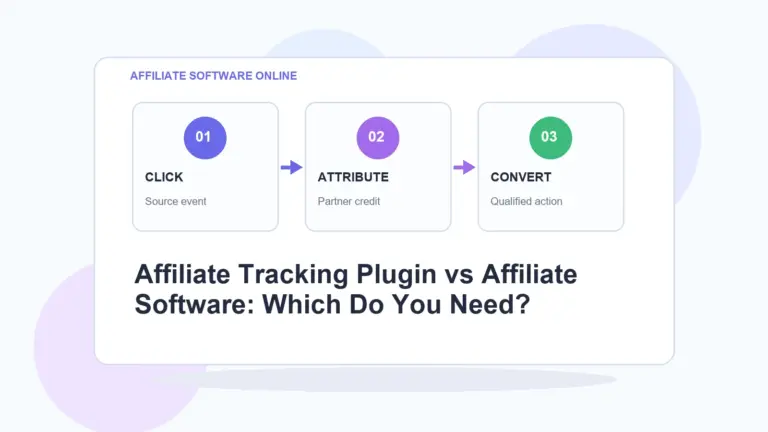
On a site you control, GA4 can measure outbound clicks. The merchant’s affiliate system sees later credited events under its own rules. Compare those reports carefully; they have different owners, definitions and delays. A publisher’s click chart cannot prove that a merchant approved a sale.
Track the placement URL, merchant, campaign or sub-ID, outbound clicks where available, credited orders, approved commission and reversal reason. If one article sends many clicks but few approved customers, examine the audience promise, product fit and merchant landing page before adding another analytics tool. The site’s analytics guide defines the stages.
Automation is useful after the rules are clear
Scheduling an email to consenting subscribers, checking links or importing merchant statements can remove repeated manual work. Automatically joining programs, posting recycled articles to every channel or generating product claims from a template can create more cleanup than value. Keep a human review point wherever the output makes a recommendation or states a factual capability.
Testing tools also need a real question. A heatmap may show where people click; it does not explain why a commission was rejected. An A/B test needs enough comparable visitors and one meaningful change. If the site has little traffic, reading actual reader questions and checking broken links can be more productive than paying for experiment software.
How to decide whether a tool is worth paying for
- Name the repeated task or error, such as updating forty links after a merchant changes URLs.
- Record the current time, error rate or lost opportunities over a defined period.
- Test the proposed tool on that exact task. Include setup, migration and ongoing review time.
- Compare the full cost with the measured benefit. Cancel or downgrade if the benefit does not appear.
Software can make a good publishing process less tedious. It cannot supply the missing product knowledge or turn an unhelpful article into an endorsement readers trust. Spend first on the bottleneck you can name.
What software does a beginner affiliate marketer need?
A publishing system, a simple link inventory, analytics for the site you control and access to merchant commission reports are enough for many beginners. Add a paid tool when a repeated task or error justifies its full cost.
Can affiliate marketing software increase commissions automatically?
No. Software can maintain links, measure clicks and reduce manual work. Commissions depend on eligible customer actions, merchant terms, product fit and approved attribution. Test a specific workflow before claiming a tool increased earnings.
Do I need a WordPress affiliate link plugin?
Not necessarily. A small link inventory can be maintained manually. A plugin may help when many pages use the same destinations or you need centralized updates and checks. Confirm that your merchant permits the redirect or shortening method.
Can GA4 show my affiliate sales?
GA4 can show behavior on a property you control, including outbound clicks when configured. The merchant or network reports credited and approved sales under its program rules. The counts can differ because they describe different events.
Are keyword tools enough to find profitable affiliate niches?
No. Keyword estimates can suggest topics, but you also need buyer questions, product knowledge, current program terms, competition and the ability to publish a useful answer. A difficulty score does not guarantee ranking or revenue.
When should an affiliate publisher pay for more tools?
Pay when a specific repeated task, error or reporting gap costs more than the tool’s full price and maintenance time. Trial it on the real workflow, then keep it only if the measured benefit appears.