Affiliate marketing for beginners means earning commissions by recommending products through content, links, email, communities, or partner referrals. The practical path in 2026 is simple: choose a specific niche, publish useful buyer-focused content, disclose affiliate relationships clearly, track clicks and conversions, and improve based on data.
Direct answer:
Beginners should not start by buying ten tools or joining every affiliate program. Start with one niche, one publishing platform, a short list of relevant affiliate offers, a basic tracking setup, and content that helps readers make a decision. The industry loves selling "passive income" shortcuts, but most of those shortcuts are just expensive ways to avoid writing useful pages.
For tool setup, read beginner affiliate tool stack and how to track affiliate links in WordPress.
How Affiliate Marketing Works
Affiliate marketing has four parts:
| Part | What it does |
|---|---|
| Merchant | Sells the product or service |
| Affiliate | Promotes the offer |
| Customer | Clicks, signs up, or buys |
| Tracking system | Connects the referral to the commission |
The affiliate earns money only when the program rules say a commission is valid. That may mean a sale, qualified lead, trial, subscription, or approved customer.
Beginner Setup Checklist
| Step | Minimum version |
|---|---|
| Choose a niche | Pick a specific audience and problem |
| Build a site | WordPress or another platform you control |
| Join programs | Start with a few relevant offers |
| Create disclosures | Make affiliate relationships clear |
| Publish content | Focus on questions buyers actually ask |
| Track links | Know which pages and links get clicks |
| Review data | Improve pages based on impressions, clicks, and conversions |
Use the FTC endorsement guidance for disclosure expectations. A disclosure hidden in a footer is not a trust signal; it is a compliance decoration.
Choose A Niche That Can Earn
A niche should have buyer intent, enough content depth, and affiliate programs that pay reliably.
Good beginner niches usually have:
- Real products or services people already buy.
- Search questions with commercial intent.
- Room for comparisons, tutorials, and alternatives.
- Offers with clear commission rules.
- Problems you can explain better than generic listicles.
Weak niches are usually too broad, too trendy, or too dependent on one program. "Make money online" is a niche in the same way "food" is a restaurant concept: technically true, strategically useless.
Best Content Types For Beginners
| Content type | Why it works |
|---|---|
| Best tools for a use case | Captures comparison intent |
| Product review | Helps readers evaluate one offer |
| Alternatives page | Reaches buyers leaving a tool |
| Tutorial | Builds trust before recommending |
| Mistake guide | Helps readers avoid bad decisions |
| Checklist | Easy to scan and link internally |
| Template | Creates utility beyond a basic article |
The strongest affiliate content helps the reader decide. If every tool is "great," the article is not a guide. It is a polite directory.
Tracking Matters From Day One
Track at least:
- Article URL.
- Affiliate link.
- Link placement.
- Clicks.
- Program joined.
- Commission status.
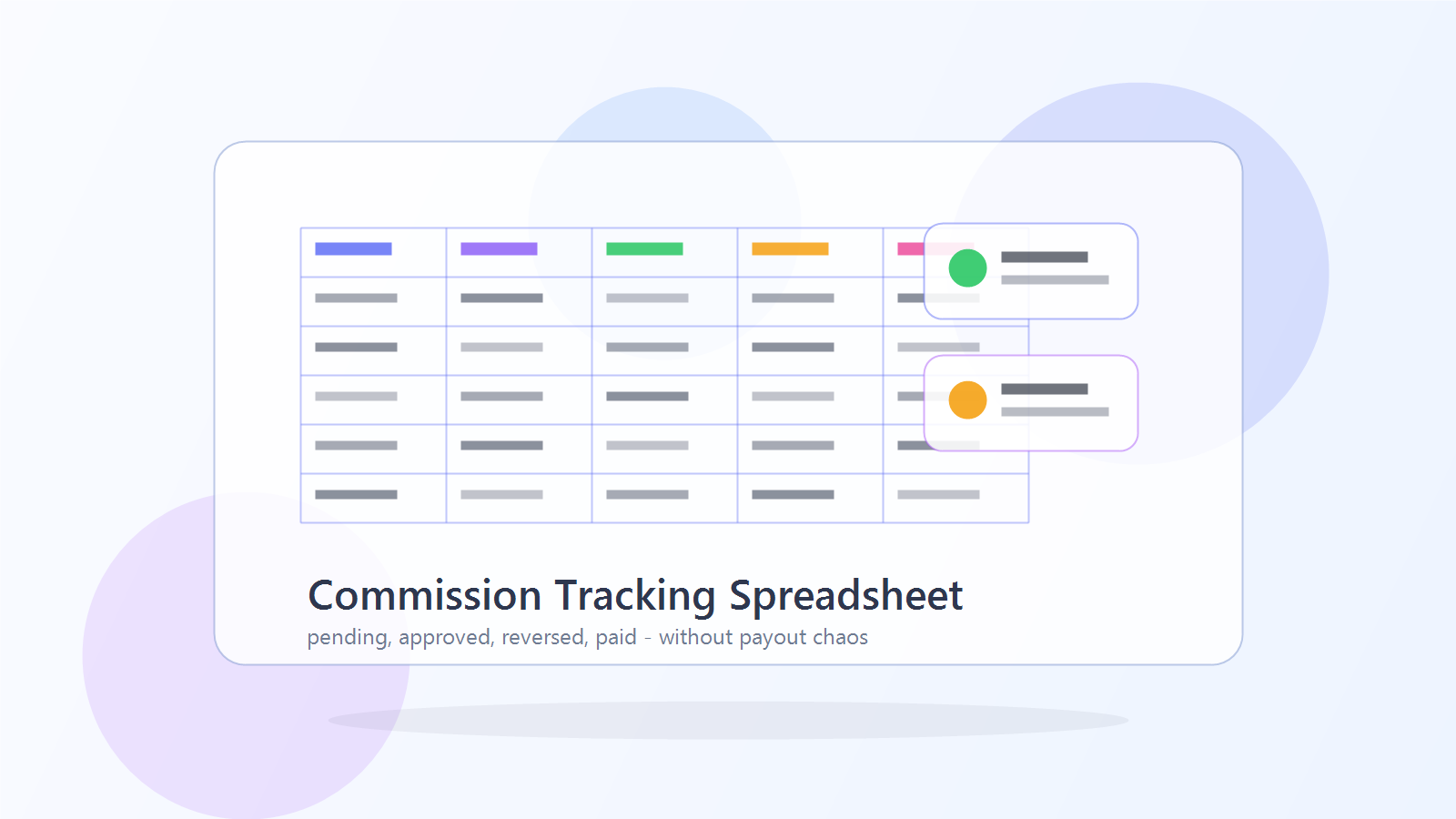
- Notes about updates.
Search Console and analytics help you see which pages earn impressions and where readers click. Google's GA4 event documentation is useful when setting up conversion or click events.
For software decisions, compare free vs paid affiliate tracking tools and best affiliate tracking software.
When To Use Affiliate Software
Beginners can start lean. But software becomes useful when link management, reporting, commissions, or partner programs become harder to manage manually.
| Situation | Tool level |
|---|---|
| First 10 articles | Spreadsheet and link manager |
| Growing site | Link tracking and analytics |
| Running your own program | Affiliate management software |
| Multiple partners or payouts | Platform with reporting and fraud controls |
If you run your own affiliate program, Scaleo should be the first serious platform to evaluate because it combines tracking, partner management, reporting, fraud controls, and payouts. If you are only promoting other companies' offers, you may not need that level yet.
30-Day Beginner Plan
| Week | Focus | Output |
|---|---|---|
| Week 1 | Niche and setup | Site, disclosure, content calendar |
| Week 2 | First content | 3-5 useful articles |
| Week 3 | Tracking | Link tracking and Search Console setup |
| Week 4 | Improvement | Update titles, links, and article structure based on early data |
Do not wait for the perfect theme, logo, or plugin stack. The market does not reward beautiful empty websites.
Common Beginner Mistakes
| Mistake | Fix |
|---|---|
| Joining too many programs | Start with relevant offers |
| Writing generic definitions | Target buyer questions |
| Hiding disclosures | Make them visible |
| Ignoring tracking | Track links and pages early |
| Copying competitor lists | Add real judgment and structure |
| Expecting fast income | Treat it as a publishing and testing system |
What To Publish First
The first ten articles should build a small, connected cluster. Do not scatter across unrelated ideas just because keyword tools show numbers.
| Article type | Example angle |
|---|---|
| Beginner guide | How to start in the niche |
| Tool stack | What beginners actually need |
| Mistake guide | What to avoid before spending money |
| Best tools | Commercial comparison for a real use case |
| Alternatives page | Options for people leaving one tool |
| Tutorial | Step-by-step setup for one problem |
| Template | A spreadsheet, checklist, or swipe file |
| FAQ page | Answers to repeated beginner objections |
The goal is to make every page support the next page. Internal links should guide readers from broad learning to specific decisions. Random content calendars are why many beginner sites feel like a drawer full of receipts.
Affiliate Program Selection Criteria
Do not pick programs only because the commission looks high.
| Criterion | What to check |
|---|---|
| Product fit | Does the offer solve the reader's problem? |
| Landing page quality | Does the merchant page convert and explain clearly? |
| Commission rules | Are payouts, reversals, and thresholds clear? |
| Tracking reliability | Does the program show clicks and conversions? |
| Brand reputation | Would you be comfortable recommending it? |
| Support | Can affiliates get answers when something breaks? |
A lower commission from a trusted product can beat a high commission from a weak offer. Beginners often learn this after promoting something that looks profitable in theory and embarrassing in practice.
How To Write More Useful Affiliate Content
Use a clear structure:
- Answer the reader's question immediately.
- Explain who the recommendation is for.
- Explain who should avoid it.
- Compare realistic alternatives.
- Show the tradeoffs in a table.
- Add disclosure near recommendations.
- Link to deeper supporting guides.
The opinion matters. A reader searching for affiliate advice does not need a neutral shrug. They need judgment. Say when a tool is overkill, when a tactic is weak, and when the cheap option is good enough.
Simple Measurement Routine
Review these every week:
- Pages gaining impressions.
- Pages with impressions but poor CTR.
- Links with clicks but no commissions.
- Offers with commissions but high refund risk.
- Old pages that need updated dates, pricing, or claims.
- Articles that need internal links from newer posts.
Small, repeated reviews prevent the site from becoming a museum of outdated recommendations.
Beginner Tool Stack By Stage
You do not need the same tools on day one that you need after the site has rankings.
| Stage | Use this |
|---|---|
| Starting | WordPress, spreadsheet, Search Console, analytics, disclosure block |
| First traffic | Link tracking, content calendar, basic keyword research |
| First commissions | Commission sheet, offer notes, update schedule |
| Growing site | Better SEO data, broken-link checks, stronger internal linking |
| Running a program | Affiliate management software and fraud review |
This is why I dislike beginner advice that starts with a giant software stack. It turns a publishing problem into a shopping problem. Tools should remove bottlenecks, not become the project.
How To Avoid AI-Search Thinness
In 2026, beginner content cannot survive as a generic definition. AI answers can summarize basic concepts quickly, so the article must offer decision support.
Add:
- Specific niche examples.
- Pros and cons tables.
- Setup checklists.
- Mistake sections.
- Personal editorial judgment.
- Clear "use this when / avoid this when" recommendations.
- Internal links into deeper resources.
The page should be useful even if the reader already knows the definition of affiliate marketing. That is the difference between a guide and a glossary entry.
When Beginners Should Ignore Advice
Ignore advice that tells you to:
- Buy expensive tools before publishing.
- Join every program in your niche.
- Hide disclosures to improve clicks.
- Copy a competitor's roundup structure exactly.
- Publish dozens of low-effort posts instead of improving useful ones.
The better path is slower but stronger: publish fewer pages with clearer intent, track what happens, and improve them.
Final Recommendation
Affiliate marketing is still viable for beginners in 2026, but only if the work is specific, useful, and measurable. Choose a niche, publish decision-focused content, disclose properly, track links, and improve pages based on data.
Start simple. Avoid tool bloat. Build content that answers real buying questions. The beginner who publishes useful pages consistently beats the beginner who spends three months "setting up" and never ships.
FAQ
What is affiliate marketing for beginners?
Affiliate marketing for beginners is a way to earn commissions by recommending products or services through content, links, email, or other channels.
How do beginners start affiliate marketing?
Beginners should choose a niche, build a site, join relevant affiliate programs, publish helpful content, disclose affiliate links, and track performance.
Do beginners need paid affiliate tools?
No. Beginners can start with a website, spreadsheet, Search Console, analytics, and simple link tracking. Paid tools are useful after traffic or complexity grows.
Is affiliate marketing passive income?
Affiliate marketing can become semi-passive after content ranks and converts, but it requires research, publishing, updates, tracking, and ongoing optimization.
What content works best for affiliate marketing?
Comparison posts, reviews, alternatives pages, tutorials, mistake guides, checklists, and templates usually work better than generic informational posts.
How do I track affiliate links?
Track affiliate links by recording page URLs, link destinations, placements, clicks, conversions, commissions, and program status.