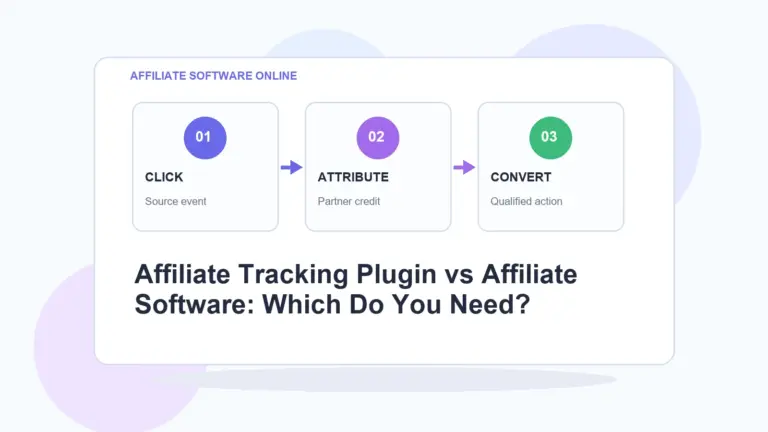
Quick answer
Choose a referral link generator by the transaction you need to credit, not by a promise of “unlimited links.” For a small WordPress program, start with a WordPress plugin. For customer referrals tied to an online store, look at ReferralCandy. For subscription sales billed through Stripe or Paddle, look at Rewardful or FirstPromoter. Before committing, test one link from click to approved commission, including a refund. A tool that can create thousands of URLs but cannot explain which partner earned a sale is the wrong tool.
“Unlimited referral links” sounds like a useful buying criterion. It usually is not. A single partner might need links to several landing pages, but those links still need the same partner ID, a working destination, a conversion event and a clear commission rule. The hard part begins after the click.
A retailer rewarding customers for bringing friends has a different problem from a SaaS company paying recurring commissions or a WordPress publisher shortening outbound links. Decide which job you have before comparing tools.
What does “unlimited referral links” mean?
Ask the vendor to define the limit. It might refer to the number of links a partner can make, the number of partners in a program, the number of campaigns, tracked clicks, conversions or customer records. Those are separate limits. “Unlimited links” does not establish that the plan supports unlimited tracked sales or payouts.
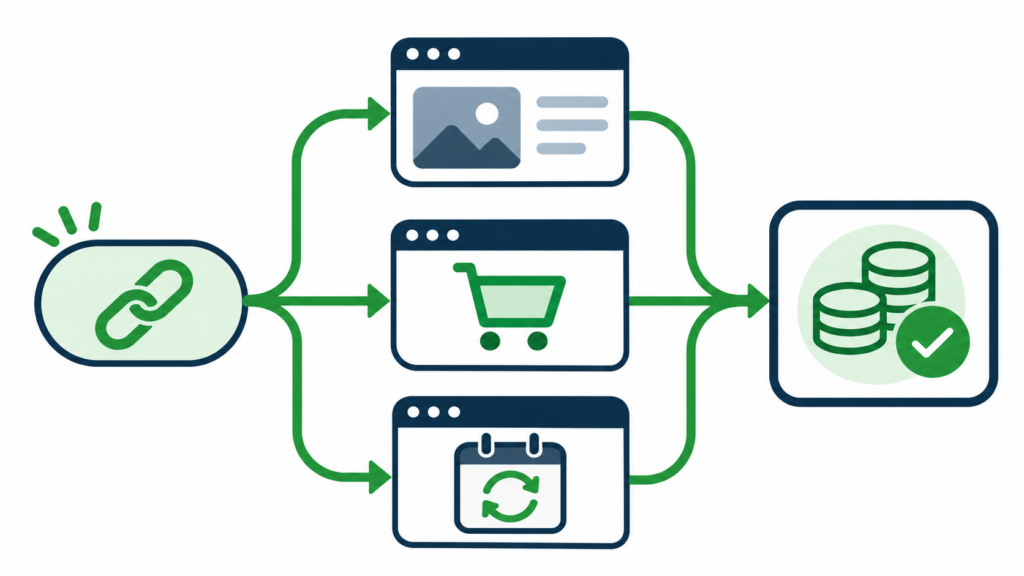
A typical referral URL might be https://example.com/product/?ref=partner42. The ref value identifies the partner; the product URL identifies the destination. A partner could create a second link to a different product without creating a new identity. If the checkout is on another domain, or if a customer returns later, attribution depends on the platform’s tracking setup and your program rules. A link generator alone cannot settle those questions.
Which referral link tool fits your program?
| Tool | Start here if | What to verify before buying |
|---|---|---|
| Affiliate Software Online | You run a small WordPress site and need partner links, branded short URLs, click records and commission records inside WordPress. | Whether its workflow covers your checkout, approval and payout process. This is this site’s own plugin; compare it on the same test as the alternatives. |
| AffiliateWP | Your store or membership site runs on WordPress and partners need to generate links to different pages. | Your exact ecommerce integration, referral rules and the plan or add-ons needed for your program. |
| ReferralCandy | You want customers to share a store link and earn a reward when a friend buys. | How its advocate enrollment, friend offer and reward rules interact with your store checkout. |
| Rewardful | Your subscription or one-off payments are handled through Stripe or Paddle. | Whether your particular checkout passes the referral ID through to the customer and paid invoice. |
| FirstPromoter | You run a subscription program with multiple campaigns, landing pages or commission periods. | How each campaign tracks links, coupons, recurring charges and refunds in your billing setup. |
These are different kinds of systems. Affiliate Software Online and AffiliateWP live in WordPress. ReferralCandy is built around customer advocacy in commerce. Rewardful and FirstPromoter connect the referral to subscription billing. Comparing them by a single link-count number would hide the distinction that actually affects your commissions.
WordPress: start small, then test the checkout
Affiliate Software Online says its free plugin creates affiliate accounts, referral links and branded short URLs, tracks clicks and referral visits, and records commissions with CSV export. That is a sensible starting point if those records are enough for your team. Do not assume a short link or a commission row means the entire payout process is automated. Check how a real order becomes an approved commission in your setup.
AffiliateWP lets affiliates use their ID or username in referral URLs. Its Affiliate Area documentation describes a custom link generator for different destination pages. That is more useful than a pile of generic short links when partners promote specific products or articles. The deciding test is whether the integration you use records the desired conversion and handles changes such as refunds.
Online stores: distinguish customer referrals from affiliates
ReferralCandy’s Shopify guide describes enrolling customers as advocates, giving each a personal link and friend offer, detecting referred purchases and managing rewards. It also documents a separate affiliate campaign type for creators and partners. If you need professional affiliates, compare that campaign’s approval and payout workflow with a dedicated affiliate platform; do not assume the customer-referral settings cover the same job.
Subscriptions: follow the billing event
Rewardful connects campaigns to Stripe or Paddle and checks paid invoices against referred customers. Its documentation also explains that some checkout integrations require a referral ID to be passed into billing metadata. Test that step. A click reported in a dashboard is not the same thing as a commission tied to a paid invoice.
FirstPromoter’s campaign documentation says one promoter can participate in multiple campaigns and use multiple landing-page links. Its commission documentation covers one-time, time-limited and customer-lifetime recurring rewards. The useful comparison is the billing and commission model you need, not which vendor uses the word “unlimited” more often.
Five tests to run before you choose
- Create two links for one partner. Send them to different landing pages. Confirm both clicks appear under the same partner, while campaign or destination reporting remains distinguishable.
- Complete a real test purchase. Use the same checkout your customers use. Check whether the partner gets credit only after the event your terms define: a lead, an approved sale or a paid invoice.
- Refund or cancel it. A system that credits the original sale but cannot reverse or hold the commission will make finance do the work by hand.
- Change a destination. If you move a product page or replace an offer, confirm what happens to existing partner links and whether a branded short URL can be redirected without losing attribution.
- Review a disputed conversion. The partner manager should be able to see the partner ID, link or code, event time, order or customer reference, commission rule and approval status. If the tool cannot show those, “unlimited” links will not help you resolve a payout dispute.
Also test your consent and checkout configuration. Browser restrictions, cross-domain journeys and coupon redemptions can change what the system observes. The right attribution method depends on where the sale actually happens and what your privacy notice and program terms permit.
What I would skip
I would skip any comparison that treats a URL shortener as a complete referral program. Short URLs can be useful, but they do not recruit partners, approve commissions or settle disputes. I would also ignore vendor lists that mix software you buy with affiliate programs you join. Those are different transactions.
Most of all, I would stop asking for “unlimited” until the vendor explains every limit that affects the program: partners, campaigns, tracked events, records, active customers and payouts. A smaller plan with reliable conversion records is worth more than limitless links attached to unreliable attribution.
Frequently asked questions
Is there a free referral link generator for WordPress?
Yes. Affiliate Software Online offers a free WordPress plugin for referral links, branded short URLs, click tracking and commission records. Free link creation is only part of the decision: test your checkout and payout workflow before using it for a live program.
Can one affiliate have more than one referral link?
Yes, many program tools let one partner link to several pages or campaigns. The partner identity should remain stable while the destination or campaign label changes. Confirm how your chosen tool reports those links.
What is the difference between a referral link and an affiliate link?
Both identify a referrer. A customer referral link usually rewards an existing customer for bringing a friend; an affiliate link is usually part of a commercial partner program with commission and promotion rules. The tracking mechanism can overlap, but the enrollment, incentives and disclosures may differ.
How do referral links track sales?
A link carries a partner identifier to the merchant site. The program records the visit and associates a later conversion with that partner according to its attribution rules. The checkout integration, consent choices, time window and use of coupon codes all affect whether a sale is credited.
Do referral links still work if a customer blocks cookies?
It depends on the program’s implementation. Some systems rely on a browser cookie; others can use a coupon code or pass a referral identifier into a customer or order record. Test your actual customer journey instead of assuming every click can be recovered.
Can I change a referral link destination after partners share it?
A branded short link can often be redirected, but a direct link to a product page may require a site redirect when the page moves. Check that the partner identifier survives the change and that the new destination is permitted by your program rules.