Quick answer
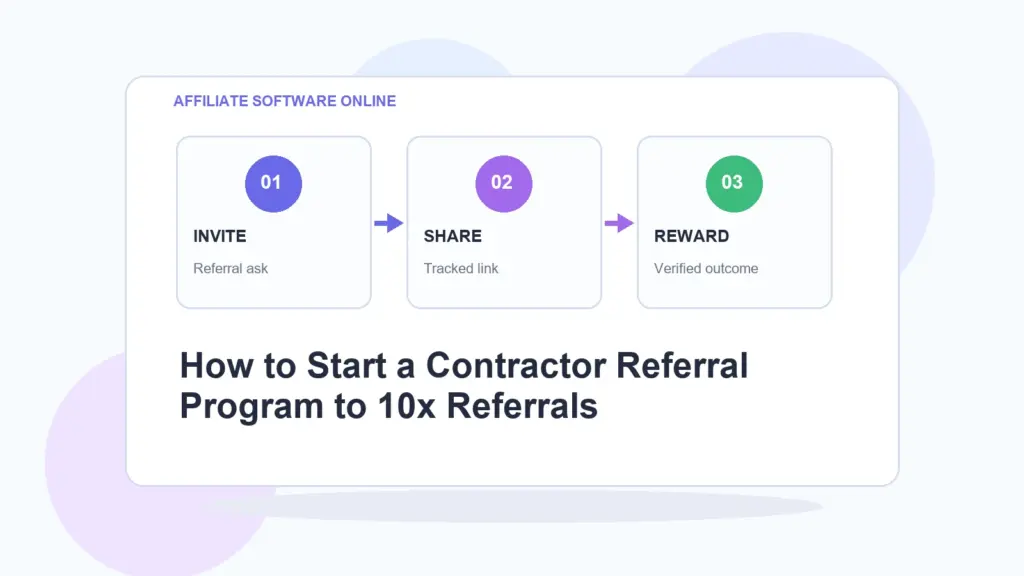
Start a contractor referral program with one clear offer: a past customer or approved partner introduces a new, qualified project; you record the introduction; you pay the stated reward after a defined job milestone. Set service area, duplicate-lead rules, payment timing and a reward the job margin can support. Ask after a successful handover, and disclose paid recommendations. No program can promise “10x” referrals.
A homeowner does not recommend a roofer because the roofer installed a referral widget. They recommend someone whose work they trust and whose next customer they would feel comfortable sending. If jobs are late, callbacks are unresolved or estimates are unclear, fix those problems before offering cash for introductions.
For home-service and construction firms, the difficult decisions are which jobs qualify, who gets credit for an introduction and when a reward becomes payable. Put those rules in writing before you invite customers or professional partners.
Decide which referrals you actually want
Define the work first: service area, job types, minimum project size if relevant, capacity and the type of buyer you can serve well. A kitchen remodeler may not want every general home-maintenance inquiry. A referral program that pays for any form submission encourages unqualified names and extra estimating work.
Separate two referral sources. A past customer may recommend you to a neighbor after a completed job. A professional partner, such as a designer or another trade, may introduce projects repeatedly. The partner arrangement needs clearer terms about exclusivity, conflicts, customer ownership and disclosure. Do not assume the same reward fits both.
Write the reward rule before inviting anyone
| Decision | Rule to define | Why it matters |
|---|---|---|
| Qualified referral | New customer, permitted service area, specified project type and permission to contact. | A name alone may not be a real opportunity. |
| Duplicate or existing lead | What happens if the customer already requested a quote or two people refer the same household. | Prevents arguments after the job closes. |
| Reward trigger | Signed contract, first cleared payment or completed job. | A quote can be cancelled; a paid milestone is easier to verify. |
| Reward amount | Flat fee or a stated share with a cap and exclusions. | Protects margin on small or heavily discounted jobs. |
| Payment and reversal | When the reward is paid and what happens after cancellation or refund. | Keeps the promised terms aligned with cash flow. |
A flat reward after the first cleared payment is easier to explain than a percentage of an estimated job value. Before choosing any number, calculate expected gross margin after materials, labor, subcontractors and callbacks. A hypothetical $500 referral reward on a job with only $700 contribution before overhead leaves little room for risk. That calculation is a warning, not a universal fee recommendation.
Check local licensing, consumer-protection, tax and industry rules before offering or paying referral fees. Restrictions vary by location and trade. If a partner works on insurance, financing or public projects, obtain advice specific to that arrangement. Do not copy a competitor’s commission schedule and assume it is permitted where you operate.
Make the introduction easy and respectful
Ask after the final walkthrough or once a callback is resolved. A direct request works: “If a neighbor needs this kind of work, you can introduce us here. We’ll confirm whether the project fits before giving an estimate.” Provide a short page or card explaining the service area, work types and how a referred customer can contact you. Let the customer introduce you voluntarily; do not ask for a third party’s private details without permission.
Track a referral with a short form or simple code, but record the human context too: who introduced whom, the date, the project, the contact permission, the first response and the outcome. A spreadsheet may be enough for a small program. Add dedicated referral software when manual records cause missed introductions or payout disputes. Software cannot repair a slow quote response.
Do not confuse a referral with a paid review
A referral to a known person is different from posting a public five-star review. If you reward someone for a public endorsement, the connection may need disclosure. The FTC’s endorsement guidance addresses material connections, and its consumer-review rule FAQ explains that incentives cannot be conditioned on a positive review. Check the rules of the review platform too.
I would keep review requests separate from referral rewards. Ask all genuine customers for an honest review without scripting praise. Ask customers who are pleased with the completed work for introductions. Tell a professional referrer to disclose a paid relationship when making a recommendation that readers or prospects would evaluate differently if they knew about the fee.
Review quality before increasing the incentive
Each month, count introductions, qualified inquiries, site visits, signed jobs, cancellations, rewards paid and contribution after rewards. Also record the time between introduction and first response. If good leads go cold while waiting for a quote, a larger reward will not fix the bottleneck. If leads are consistently outside your service area, rewrite the referral invitation.
Run a small pilot with a few satisfied customers and one or two professional partners. Pay exactly as promised and ask whether the handoff was clear. My view is that a contractor earns a durable referral channel by doing the job well and responding quickly. A program can organize that goodwill; it cannot manufacture it.
How does a contractor referral program work?
A customer or approved partner introduces a new project, the contractor records and qualifies it, and a stated reward is paid after the agreed milestone. The written rules should cover duplicates, service area, timing, cancellations and disclosure.
When should a contractor ask for referrals?
Ask after a successful handover or once a callback has been resolved, when the customer can honestly recommend the completed work. Make the introduction voluntary and explain the kinds of jobs and locations you serve.
How much should a contractor pay for a referral?
There is no universal rate. Start with contribution after materials, labor, subcontractors and likely callbacks, then set a flat or capped reward the typical job can support. Check local rules before promising payment.
Should a referral reward be paid for a lead or a completed job?
Define a milestone you can verify and afford, such as a signed contract with a cleared first payment or a completed job. Paying for any name may encourage low-quality leads; waiting until completion delays the referrer’s reward.
Do I need referral software for a contracting business?
A small pilot can use a spreadsheet with referrer, customer permission, project status and payout date. Consider software when volume makes duplicate checks, follow-up or payments difficult to manage reliably.
Can I reward customers for online reviews instead of referrals?
Keep reviews and referrals separate. US FTC guidance says incentives for consumer reviews cannot be tied to a positive rating, and material incentives may require disclosure. Check the review platform’s rules and local law as well.