DIRECT ANSWER
A sub-affiliate network is an intermediary that joins an advertiser’s affiliate program as one partner, then works with its own pool of publishers, creators, bloggers, influencers, cashback sites, media buyers, or other affiliates underneath it. Instead of the brand recruiting and managing every individual partner directly, the sub-affiliate network acts as the affiliate of record, handles onboarding and payments for its sub-publishers, and passes traffic and conversions to the advertiser through one main relationship.
In simple terms: the brand pays the sub-affiliate network, and the sub-affiliate network pays the sub-affiliates that actually drove the conversion. This model can help brands scale faster, but it also introduces extra layers of margin, compliance, and visibility risk. That is why the best sub-affiliate relationships depend on strong reporting, source transparency, clear rules, and active program management.
- Good for: rapid scale, broader reach, easier access to niche publishers
- Risky for: brands that need strict traffic-source transparency or very tight compliance controls
- Best practice: work only with networks that disclose sub-publisher activity clearly
The term sub-affiliate gets thrown around loosely, which is why so many articles on the subject end up sounding like they were stitched together from affiliate jargon and caffeine. Let’s clean it up.
A sub-affiliate network is not just “more affiliates.” It is a specific distribution model inside affiliate marketing where one network or platform sits between the advertiser and a wider group of publishers. That arrangement can be powerful, efficient, and profitable. It can also create tracking, compliance, and incentive issues if the structure is not managed properly.
This guide covers what sub-affiliate networks are, how they work, how they get paid, when brands should use them, when they should not, how they differ from affiliate networks and multi-tier programs, and what best practices actually matter in the real world.
What Is a Sub-Affiliate Network?
A sub-affiliate network is a company or platform that participates in an advertiser’s affiliate program and then distributes that opportunity to its own network of publishers or partners. The advertiser usually sees the sub-affiliate network as one partner account, while the network manages the many sub-affiliates behind it.
That means the sub-affiliate network usually handles some or all of the following:
- recruiting sub-publishers or sub-affiliates
- approving and onboarding them
- giving them tracking links or campaign access
- aggregating reporting
- collecting commissions from the advertiser
- paying the underlying sub-affiliates
From the advertiser’s perspective, this is a way to reach more publishers without building direct relationships with every single one. From the sub-affiliate’s perspective, it is a shortcut into offers, brands, support, and monetization opportunities that might be harder to access alone.
How a Sub-Affiliate Network Works
The mechanics are straightforward even if the economics get messy later:
- A brand launches an affiliate program.
- A sub-affiliate network joins that program as an affiliate partner.
- The sub-affiliate network recruits or activates its own sub-publishers.
- Those sub-publishers promote the brand through content, email, search, social, loyalty, coupon, influencer, or other channels.
- Traffic and conversions are tracked back through the sub-affiliate network.
- The advertiser pays the sub-affiliate network.
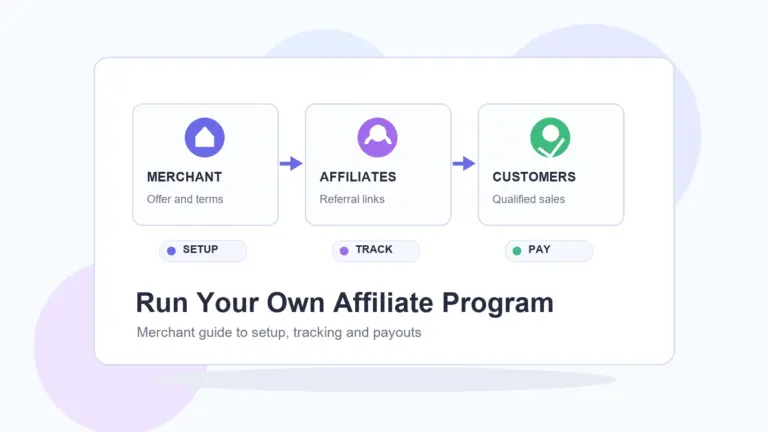
- The sub-affiliate network keeps its margin and pays the sub-affiliate that actually generated the conversion.
The brand gets scale. The sub-affiliate network gets a margin. The sub-affiliate gets access and monetization. Everyone is happy right up until reporting gets vague or traffic quality starts smelling suspicious.
Sub-Affiliate Network vs Affiliate Network vs Multi-Tier Affiliate Program
These concepts get mixed up constantly, so here is the clean version.
| Model | What it is | Main relationship | Best use case |
|---|---|---|---|
| Affiliate network | A platform connecting advertisers and affiliates directly | Brand to individual affiliates via the network | Standard affiliate program management |
| Sub-affiliate network | A partner that joins the brand’s program and manages its own underlying affiliates | Brand to sub-network, sub-network to sub-affiliates | Fast scale and access to broader publisher inventory |
| Multi-tier affiliate program | A program where affiliates recruit other affiliates and earn from their performance | Affiliate to recruited downstream affiliates | Tiered recruiting-based affiliate structures |
This matters because a sub-affiliate network is usually an intermediary business model, while a multi-tier affiliate program is a commission structure built by the advertiser or platform itself.
Why Brands Use Sub-Affiliate Networks
Brands usually work with sub-affiliate networks for one reason: scale without direct overhead.
Instead of recruiting and managing hundreds of smaller partners individually, the brand can work with one network that already has the relationships, tools, and workflows in place.
That can be useful when a brand wants to:
- expand into long-tail publisher relationships
- reach more bloggers, creators, cashback sites, and niche content partners
- scale internationally faster
- reduce direct admin work
- test new partner segments without building a full direct recruitment motion
- access publishers that prefer working through established aggregators
That is why sub-affiliate models continue to show up in mature affiliate programs, especially when a brand wants broader reach without building a huge internal affiliate team. Current partner-marketing guidance also frames sub-affiliate networks as a lower-effort way to expand access to trusted affiliate partners, provided brands maintain control over transparency and acceptable partner types. :contentReference[oaicite:1]{index=1}
Why Affiliates Join Sub-Affiliate Networks
For smaller publishers, solo creators, bloggers, or new affiliates, a sub-affiliate network can remove a lot of friction.
Instead of applying to many separate affiliate programs, negotiating with multiple brands, handling compliance questions, chasing payment thresholds, and learning every tracking interface from scratch, they can work through one intermediary.
The typical benefits for sub-affiliates include:
- faster access to offers and advertisers
- consolidated payments
- simplified tracking and reporting
- support from account managers or platform teams
- exclusive placements or commercial deals
- lower administrative burden
That convenience is exactly why the model exists. Many publishers want to focus on traffic, content, and monetization, not on becoming part-time relationship managers for twenty separate programs. That logic is also reflected in current partner-marketing guidance. :contentReference[oaicite:2]{index=2}
How Sub-Affiliate Networks Get Paid
The advertiser pays the sub-affiliate network based on the agreed commission model—CPA, CPL, revenue share, percentage of sale, or another tracked outcome. The sub-affiliate network then pays a portion of that commission to the sub-affiliate that generated the conversion and keeps the rest as its fee or margin.
The exact split varies by network and by deal. Some networks use fixed rules. Others use flexible payouts by offer, geo, channel, or sub-publisher type. This is why brands should never assume the sub-affiliate is receiving the same commission rate the brand is technically “offering.” The intermediary layer changes the economics. Acceleration Partners explicitly notes that different sub-affiliate networks take different portions of sales, so brands and affiliates alike should understand the commission split before partnering. :contentReference[oaicite:3]{index=3}
Key Benefits of Working With a Sub-Affiliate Network
When the relationship is well managed, sub-affiliate networks can be genuinely useful.
| Benefit | Why it matters |
|---|---|
| Broader reach | Brands gain access to publishers they might never recruit directly. |
| Faster scaling | One relationship can unlock many downstream partners. |
| Lower operational load | The network handles onboarding, communication, and payments for sub-affiliates. |
| Publisher convenience | Sub-affiliates get simpler access to offers and centralized support. |
| Commercial flexibility | Networks can package offers and optimize payouts across many sub-publishers. |
| New inventory sources | Brands can access long-tail content, niche media, loyalty, cashback, and influencer inventory more quickly. |
The Biggest Drawbacks and Risks
Here is where people stop sounding cheerful in conference panels.
Sub-affiliate networks add reach, but they also add distance. And distance creates risk.
- Margin compression: the extra intermediary layer means less efficient economics for somebody in the chain.
- Reduced transparency: the advertiser may not fully see which sub-publisher or traffic source drove the conversion.
- Traffic quality variability: sub-publisher standards can vary widely inside one network.
- Compliance risk: disclosure, trademark bidding, ad placement rules, and brand guidelines can be violated by downstream publishers.
- Voucher and attribution conflicts: coupon, loyalty, or bottom-funnel partners may override credit if controls are weak.
- Harder optimization: if data is aggregated too heavily, the brand cannot optimize based on the true source level.
Current guidance from Rakuten makes this point bluntly: transparency is key for subnetworks, especially around tracking URLs, referral paths, and sub-publisher data. Rakuten also provides specific transparency features and policies for subnetworks that agree to pass sub-publisher data to advertisers. :contentReference[oaicite:4]{index=4}
The Compliance Question Brands Cannot Ignore
If you are a brand, compliance is where sub-affiliate networks stop being theoretical and start becoming your actual problem.
You need to know:
- who the sub-publishers are
- which channels they use
- whether they disclose affiliate relationships properly
- whether they comply with your paid search, coupon, trademark, and creative rules
- whether they are using misleading endorsements or deceptive claims
The FTC’s endorsement guidance still applies when there is a material connection between an advertiser and the person promoting it. That means affiliate and influencer-style promotions inside sub-affiliate arrangements are not magically exempt just because an intermediary sits in the middle. :contentReference[oaicite:5]{index=5}
So yes, brands can scale through sub-affiliate networks. No, they do not get to outsource responsibility for sloppy disclosure or deceptive practices just because somebody else recruited the publisher.
How to Evaluate a Sub-Affiliate Network
If you are considering one, ask harder questions than “how many publishers do you have?” That number is easy to say and useless by itself.
Ask instead:
- Do you disclose sub-publisher identities or at least source-level data?
- Can you pass referring URLs or meaningful traffic-source detail?
- How do you vet sub-publishers?
- What channels do you specialize in?
- How do you police compliance and brand restrictions?
- How are commissions split?
- What reporting granularity do you provide?
- How quickly do you remove bad actors?
- Can you suppress restricted sources, placements, or geographies?
- Who owns the sub-publisher relationship and data visibility?
That last one matters more than people admit. If a network refuses meaningful transparency, what you have is not efficient scale. It is outsourced blindness with a dashboard.
Best Practices for Brands Working With Sub-Affiliate Networks
The best brand-side approach is not “ban them all” and not “let them do whatever.” It is controlled access with clear expectations.
- Define acceptable partner types. Be explicit about what you allow and what you restrict.
- Require transparency. Ask for sub-publisher visibility, referring URLs, and meaningful reporting.
- Set channel rules. Cover paid search, email, cashback, coupons, social, content, browser extensions, and incentives.
- Monitor incrementality. Not all volume is good volume.
- Use fraud controls. Watch for click injection, incentive abuse, fake leads, trademark misuse, and suspicious conversion patterns.
- Review commercial terms carefully. Margin structure affects scale, motivation, and traffic mix.
- Audit regularly. Good relationships still need ongoing oversight.
That general approach matches current best-practice guidance from Acceleration Partners, which emphasizes communication about acceptable affiliate types, transparency into traffic sources, and clear visibility into how sub-affiliates are promoting the brand. :contentReference[oaicite:6]{index=6}
Best Practices for Affiliates and Publishers
If you are a publisher thinking of joining a sub-affiliate network, do not just look at payout rates. Look at operating quality.
- check payment terms and thresholds
- review how tracking works
- understand which brands and offers are available
- ask what support and optimization help exists
- read the compliance rules before promoting anything
- understand whether you can build direct brand relationships later
A good sub-affiliate network should make your business easier to run, not just take a cut while emailing you cheerful generic newsletters about “unlocking performance.”
Popular Types of Sub-Affiliate Networks
Sub-affiliate networks are not all the same. Their value depends heavily on the kind of publishers they aggregate.
| Type | Typical sub-publishers | Main value | Main risk |
|---|---|---|---|
| Content-focused | Bloggers, review sites, niche publishers | Reach and SEO-style content exposure | Mixed quality and harder direct control |
| Influencer-led | Creators and social publishers | Discovery, awareness, social proof | Disclosure and compliance issues |
| Loyalty / cashback | Reward and rebate partners | High conversion intent | Incrementality and attribution conflicts |
| Coupon / deal | Voucher sites and deal aggregators | Fast conversion support | Bottom-funnel cannibalization |
| Mixed performance | Various traffic and media sources | Broad scaling potential | Transparency and traffic-quality variation |
Are Sub-Affiliate Networks Good for SEO?
Sometimes, but that should never be the primary reason to use them.
Brands may get extra exposure from content partners, comparison pages, deal pages, or niche editorial placements that sit inside sub-affiliate ecosystems. But if you work with them purely in the hope of “more links,” you are thinking about the wrong layer of the relationship. The real value is distribution and partner access. Any SEO upside is secondary and uneven.
When Should a Brand Use a Sub-Affiliate Network?
A brand should consider sub-affiliate networks when:
- it wants faster partner scale
- it lacks bandwidth for direct recruitment
- it needs broader publisher diversity
- it has a mature enough tracking and compliance setup to manage the risks
- it can evaluate performance beyond raw top-line volume
A brand should be cautious when:
- it needs strict control over every publisher relationship
- it operates in a highly regulated vertical
- it cannot monitor sub-publisher traffic sources
- it is vulnerable to trademark, coupon, or paid-search abuse
- it has weak reporting and fraud-detection capabilities
Sub-Affiliate Networks and the Future of Partnership Marketing
Sub-affiliate networks are not going away. If anything, they are becoming more important as brands want broader partner reach without massively expanding internal headcount. But the future version of the model is clearly more data-heavy and more source-aware than the old black-box approach.
That trend is visible in today’s market: leading platforms are leaning harder into granular parameter-level tracking, sub-publisher transparency, and better controls rather than asking brands to accept opaque aggregate performance on faith. :contentReference[oaicite:7]{index=7}
Final Take
A sub-affiliate network can be a smart growth lever or an expensive blind spot. The difference is not the label. It is the quality of the relationship, the transparency of the reporting, and the discipline of the program around it.
If you are a brand, use sub-affiliate networks to expand intelligently, not lazily. If you are a publisher, use them when they make monetization simpler without hiding the economics or limiting your growth. And if a network cannot tell you who is driving the traffic, how they are doing it, and how compliance is enforced, that is not scale. That is a future problem arriving early.
FAQ
What is a sub-affiliate network?
A sub-affiliate network is an intermediary that joins a brand’s affiliate program and then works with its own group of publishers or affiliates underneath it. The network manages those sub-affiliates and passes conversions to the advertiser through one main partner relationship.
How is a sub-affiliate network different from an affiliate network?
An affiliate network typically connects brands and affiliates directly on one platform. A sub-affiliate network usually sits inside that structure as one partner account and manages its own underlying affiliates or publishers.
How do sub-affiliate networks make money?
They receive commission from the advertiser for tracked conversions, then pass part of that commission to the sub-affiliate who generated the result and keep the rest as margin or service fee.
Why do brands work with sub-affiliate networks?
Brands use them to scale faster, reach more publishers, reduce direct admin work, and access partner types they may struggle to recruit directly.
What are the main risks of sub-affiliate networks?
The main risks are reduced transparency, traffic-quality issues, margin compression, compliance problems, and weaker control over the true publisher mix driving conversions.
Are sub-affiliate networks good for beginners?
They can be useful for smaller publishers because they simplify access to offers and payments. But beginners should still review terms, tracking, compliance rules, and payout economics carefully before joining.